About Zeller

Building the future of business banking.

Contact Sales
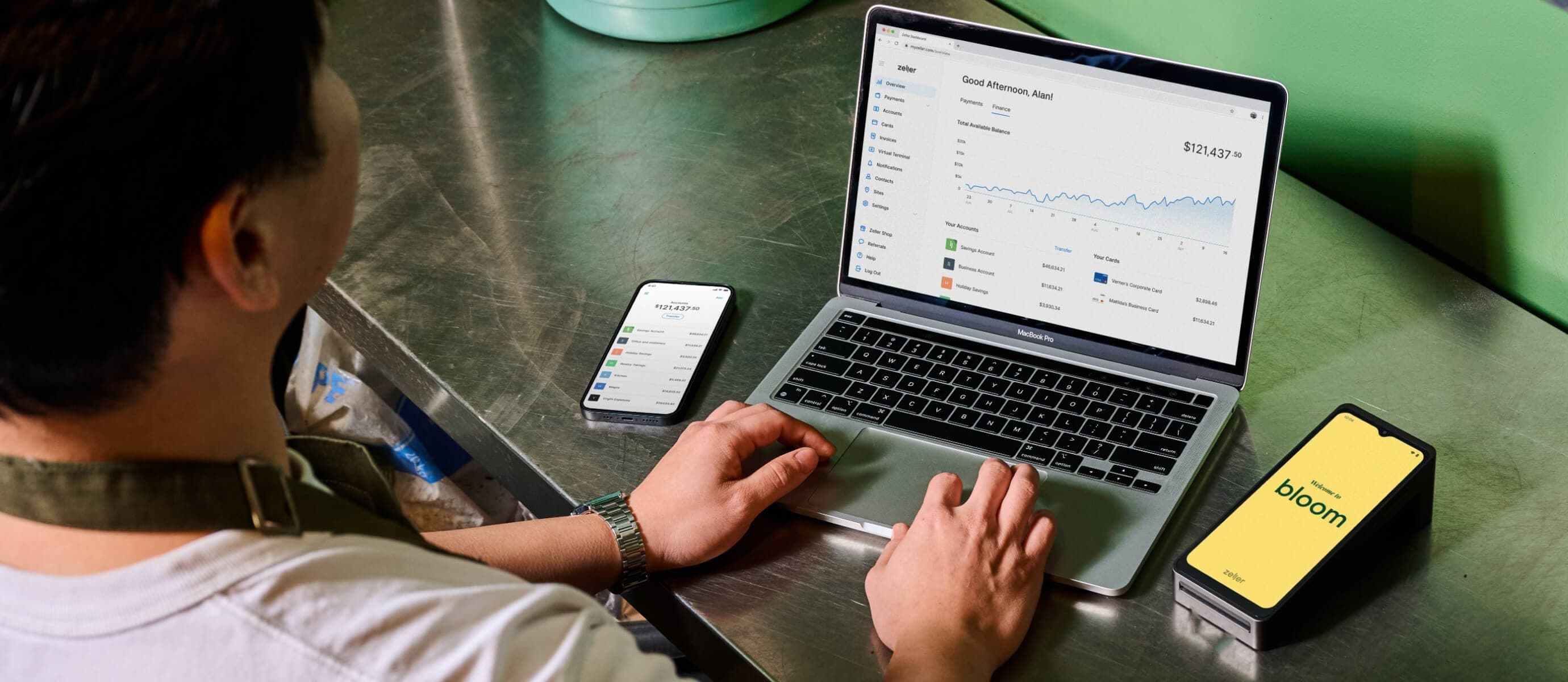
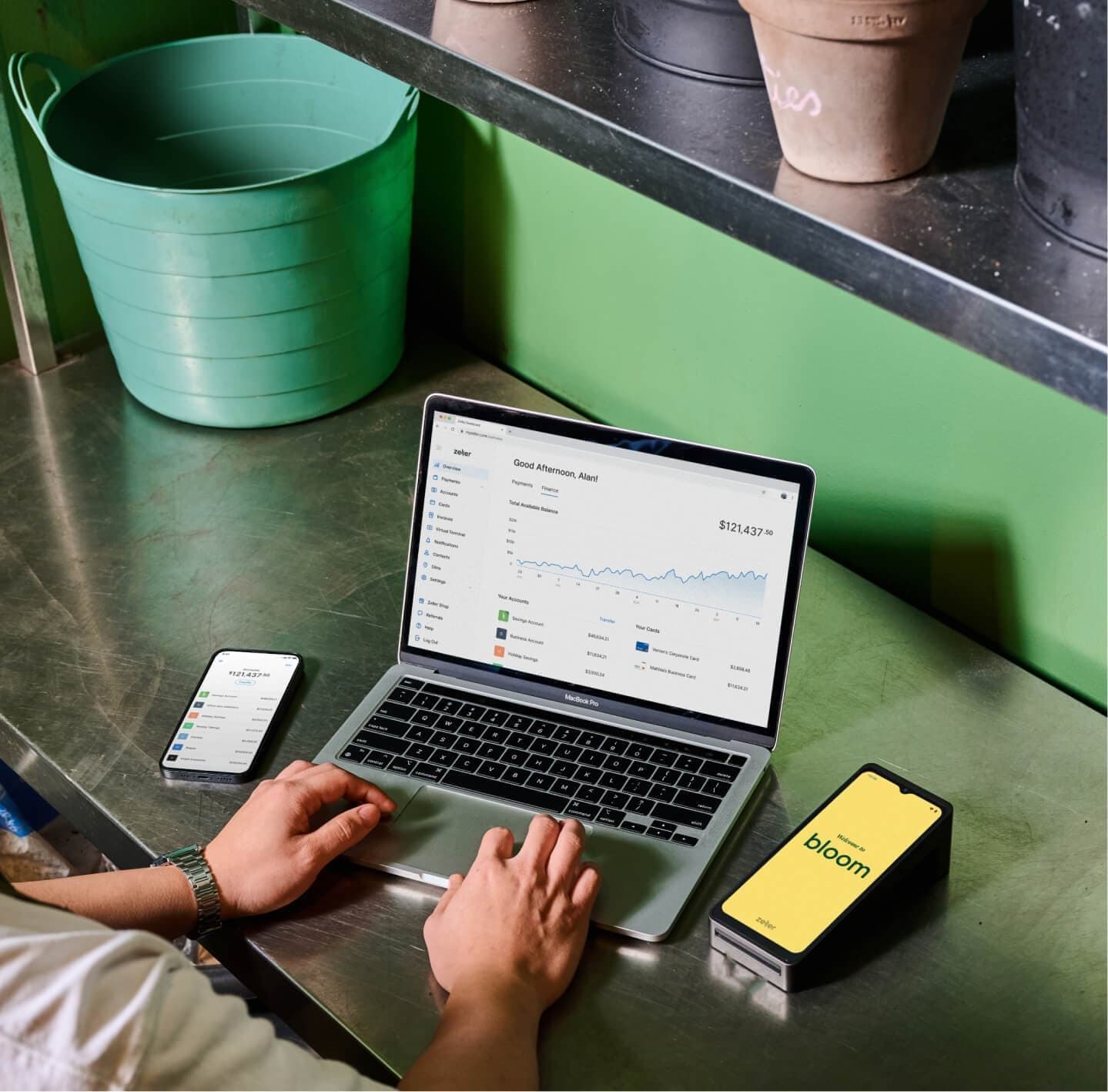
Zeller - App, Dashboard and Terminal on Kitchentop

Why Zeller started

Businesses deserve better.

While the disparity between the number of businesses and the limited availability of banking services to them has always been stark, the impact of the global COVID-19 pandemic amplified the importance for simpler access to smarter, integrated financial services.

Established businesses struggled, and in many cases closed their doors, as a result of stagnating cash flow. Witnessing this, it became clear to us that Zeller’s goal – to reimagine the future of business banking – is more important than ever.
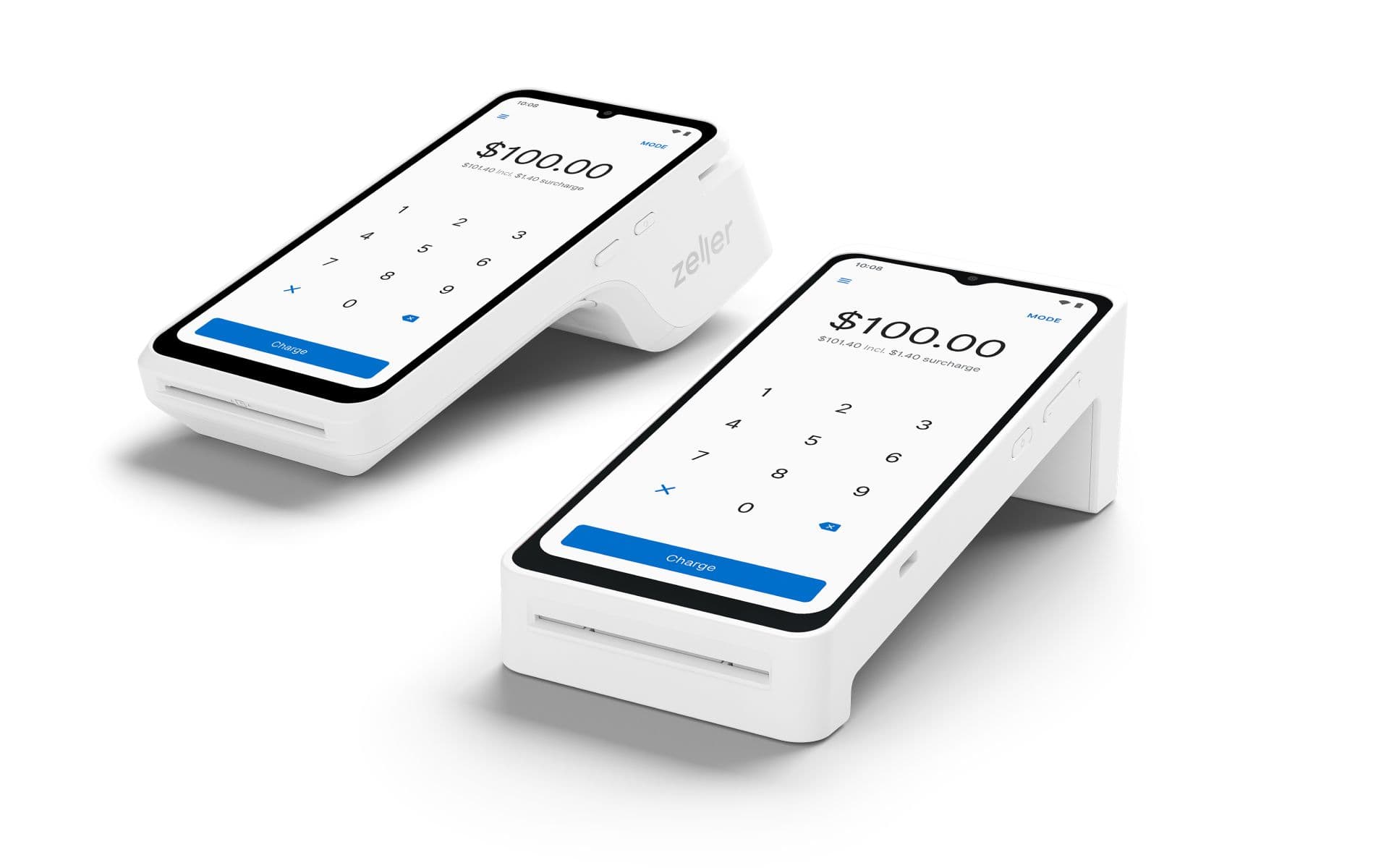
White Zeller Terminal 1x and Terminal 2
Zeller POS and Terminal 1x

What we believe

Building the future of business banking.

Accepting payments, managing your finances, and paying recipients should be simple. Unfortunately this isn’t always the case. Finding integrated financial solutions to help your business thrive often requires you to piece together multiple products from different providers.

With the majority of Australian businesses being underserved by the traditional banks through a lack of innovation, disconnected products, opaque pricing, and restrictive contracts, Zeller set out to level the playing field so every business can access the tools they need to manage their finances. We’re hard at work building these tools.

Discover a career with Zeller.

Join a talented team of creators, thinkers and builders who are personally and professionally invested in our mission.


Zeller - Employees

Zeller is backed by leading investors.

We’re trusted by some of the world’s top investors, who share our vision of changing business banking for the better.

Addition logoApex Capital logoHeadline logoHostPlus logoSpark Capital logoSquare Peg logo

Support when you need it

Speak to our team

Access 24/7 human support via phone and email.

Speak to Zeller Support

Zeller Support Centre

Search for instant answers to your questions.

Visit the Support Centre

Social media

Get an instant response during business hours.

XFacebook

Zeller Business Blog

Guides and tips to help you navigate Zeller.

Read the blog

Zeller - Support Technician
zeller-terminal 1x-point-of-sale-cropped-left

It’s free to sign up for Zeller.

1

Create an account.

Signing up for Zeller takes minutes for most businesses, and it’s free.

2

Add an opening balance.

Add funds to your Zeller Account to create an opening balance.

3

Explore Zeller products.

Choose which payments or financial products you need for your business.

What’s new on the Zeller Business Blog

Read more on the Zeller Business Blog


2026–27 Federal Budget: 10 Things Small Business Owners Need to Know

2026–27 Federal Budget: 10 Things Small Business Owners Need to Know

From permanent tax write-offs to stronger competition rules and a new wave of digital support, here's what this year's budget means for you and your business. If you've been waiting for a budget that delivers something more than a one-year band-aid, this one might be worth paying attention to. Handed down this week, the 2026–27 Federal Budget puts over $3.5 billion on the table in new measures aimed squarely at small business resilience, growth and investment. And unlike some previous years, several of these measures are permanent — meaning you can actually plan around them. Australia's 2.7 million small businesses are still contending with real pressures: rising costs, supply chain disruption, slowing consumer spending, and global economic uncertainty driven in part by ongoing conflict in the Middle East. The Government's response is a mix of immediate relief and longer-term structural reform, with tax changes leading the charge. Here's what you need to know. 1. The $20,000 instant asset write-off is now permanent In what will come as a genuine relief to small business owners tired of waiting on annual renewals, the Government has finally made the $20,000 instant asset write-off permanent, effective from 1 July 2026. If your business turns over less than $10 million a year, you'll be able to immediately deduct the full cost of eligible assets under $20,000 — whether that's a coffee machine, a new EFTPOS terminal , tools of trade, or office equipment. The permanence of this measure changes things. Rather than racing to make purchases before an arbitrary deadline, you can now factor the write-off into your investment planning with confidence. The Government estimates the permanent extension will save small businesses around $32 million per year in compliance costs alone. 2. You can now carry back tax losses — and get a refund This is one of the more significant structural changes in recent memory. From 2026–27, companies with a turnover of up to $1 billion will be able to use current-year tax losses to claim a refund on tax paid in the previous two income years. Around 85,000 companies are expected to benefit, with the majority being small businesses. In practical terms: if your business makes investments to grow and ends up in a loss position, you won't have to simply absorb that loss and wait. You can carry it back and recoup tax already paid — providing a real cash flow boost at exactly the moment you need it most. From 2028–29, small start-ups in their first two years of operation will also be able to claim a refund for losses, capped to the value of Fringe Benefits Tax and withholding tax paid on employee wages. 3. A new $250 tax offset for sole traders and workers From 2027–28, the Government will introduce a new Working Australians Tax Offset worth $250 per year, benefitting over 13 million Australian workers — including approximately 1.5 million sole traders. It's not a life-changing sum, but it's a modest, ongoing tax cut that stacks on top of the three rounds of legislated tax cuts that have already been passed. If you operate as a sole trader, this offset applies directly to you. Combined with the permanent instant asset write-off, the Government is sending a clear signal that sole traders and unincorporated small businesses aren't an afterthought this time around. 4. Mental health and financial support for business owners gets a boost Running a business is hard at the best of times. When costs are rising and revenue is uncertain, the mental load can become overwhelming. From 1 July 2026, the Government will inject an additional $8 million into the NewAccess or Small Business Owners program and the Small Business Debt Helpline — two free, confidential support services specifically designed for business owners. NewAccess, developed by Beyond Blue, offers six sessions with a trained coach to help you manage stress and work through difficult periods. The Small Business Debt Helpline provides free financial counselling by phone. If either of these have been on your radar, it's worth knowing the funding is now secured and continuing. 5. Almost 500 nuisance tariffs have been scrapped Building on last year's removal of 457 tariffs, this Budget eliminates a further 497 import tariffs — saving Australian businesses around $127 million in compliance costs per year. These are the kinds of low-value tariffs that create administrative burden without meaningfully protecting local industry, and cutting them makes life simpler if you import goods for your business. The Government is also expanding the Australian Trusted Trader program with $7.6 million over four years, making it faster and easier for small businesses to export. If you've been thinking about selling internationally, this is a practical step in the right direction. 6. Fuel disruption relief, including $2.9 billion in excise relief In response to recent fuel supply disruptions, the Government has put together a targeted package to ease the burden on businesses in affected sectors. The headline measure is $2.9 billion in fuel excise relief, along with reducing the heavy vehicle road user charge to zero — a direct benefit for the transport and logistics sector. There's also interest-free loans available through the National Reconstruction Fund's $1 billion Economic Resilience Program for eligible manufacturing and logistics businesses, temporary relief for businesses unable to meet tax obligations due to fuel disruptions, and an extension of the Small Business Responsible Lending Obligation exemption for a further ten years to help maintain access to credit. 7. Stronger protections against anti-competitive conduct The ACCC is getting more teeth. Maximum penalties for anti-competitive and anti-consumer conduct under the Competition and Consumer Act and Australian Consumer Law are being doubled — from $50 million to $100 million. For small businesses that have long felt at a disadvantage when dealing with larger suppliers, platforms or competitors, this is meaningful enforcement power. There's also new protection for franchisees and other small businesses from unfair trading practices and unfair contract terms, a new Food and Grocery Code Education Program launching in 2026 to help smaller suppliers negotiate with major supermarkets, and mandatory product standards will now be freely accessible — saving some businesses over $1,600 a year. 8. Better cash flow management with dynamic PAYG installments Managing cash flow when your business conditions change quarter to quarter has long been a frustration. From 1 July 2027, small businesses will be able to opt into monthly PAYG reporting and payment, as well as dynamic installment calculations that adjust in real time to reflect what's actually happening in your business. The ATO will also remove interest charges for businesses that accidentally miscalculate their installment variation when using ATO-approved calculators. These are the kinds of small but meaningful quality-of-life improvements that reduce the financial anxiety of running a business day to day. 9. AI and digital tools get a dedicated push The Government launched AI.gov.au on 8 May 2026 — a centralised hub for AI resources and guidance focused specifically on the needs of small and medium enterprises and not-for-profits. Round 3 of the Digital Solutions program will also launch on 1 July 2026, offering coaching, workshops and webinars with a new focus on AI and emerging technologies. On the cyber security front, $89.3 million is being invested to sustain and enhance cyber security initiatives under the 2023–2030 Australian Cyber Security Strategy — including initiatives that directly benefit small businesses. As digital threats continue to evolve, this funding helps ensure small businesses aren't left exposed. 10. Reforms for start-ups: better access to venture capital and R&D support If you're running a start-up or early-stage business, there are a couple of changes worth knowing about. From 1 July 2027, venture capital incentives will be expanded to reflect modern company valuations, giving young businesses better access to funding — in larger amounts and over longer periods — particularly where traditional finance is harder to come by. From 1 July 2028, the Research and Development Tax Incentive will be reformed to be more targeted and accessible. The turnover threshold for the higher refundable offset is being lifted to $50 million, and refundability will be available to businesses operating for less than 10 years. For early-stage businesses investing in genuine innovation, this represents a meaningful improvement in how the tax system backs you. What do you think of this year's budget? For small business owners, there's a reasonable amount to be optimistic about here — particularly the permanence of the instant asset write-off and the new loss carry-back provisions, which give real planning certainty for the first time in years. The relief measures for fuel disruptions, the additional mental health support and the digital adoption programs also show a government that's at least listening to where the pressure points are. Share your thoughts with us on Facebook, Instagram , or LinkedIn. And don't forget to sign up to the Zeller Newsletter to receive more small business news, tips and stories straight to your inbox. For the full detail on this year's measures, refer to the small business fact sheet . Disclaimer: The information provided on this site is for general informational purposes only and should not be considered as advice that takes into account your business needs and objectives. If you are unsure, seek the advice of a qualified accountant or financial service advisor before deciding whether a savings account is right for your business.

What does the RBA's surcharging announcement mean for your business?

What does the RBA's surcharging announcement mean for your business?

The Reserve Bank of Australia has confirmed that card surcharging will end on 1 October 2026. Here's what the changes mean for businesses — and how to make sure you're in the best possible position before and after the deadline. What has the RBA announced? Following a comprehensive review of Australia's card payments system — which included over 260 written submissions and around 150 stakeholder meetings — the RBA's Payments System Board has confirmed a package of reforms designed to update how business owners accept card payments in person.  The three core changes are: removing the ability to surcharge customers for card payments, reducing the caps on interchange fees businesses pay, and requiring payment networks and providers to publish clearer fee information. When do these changes take effect? 1 October 2026 — Surcharging ends Surcharging on eftpos, Mastercard, and Visa cards is prohibited. New lower caps on interchange fees for domestic debit and consumer credit cards also take effect. 1 April 2027 — Foreign card caps and transparency rules A new interchange cap on foreign card payments comes into effect, alongside enhanced transparency requirements for card networks and large acquirers. Why is surcharging being removed? Surcharging was introduced over two decades ago to steer consumers towards cheaper payment methods. The RBA has concluded it is no longer achieving that goal. As card payments have become the norm and cash use has declined, it has become increasingly difficult for consumers to avoid surcharges altogether. The rules governing surcharging are complex, and without a simple, consistent way to calculate and disclose them, the system has become harder for everyone to navigate. What does this mean for your business specifically? If you don't currently surcharge: The removal of surcharging will have no impact on your day-to-day operations.  If you do currently surcharge: From 1 October 2026, you'll need to remove your card surcharge. Some businesses may choose to absorb payment costs into their advertised prices instead. Now is the ideal time to understand exactly what you're paying — and make sure you're with a provider that offers you the best hardware, reliability, and support bundled into a competitive, flat-rate transaction fee so you know what you’re paying.  Why transparent pricing matters more than ever The end of surcharging shifts the focus onto what you're actually paying to accept cards. Under typical variable-rate pricing, your transaction fee depends on the type of card your customer uses — domestic debit, international credit, or American Express, for example. That makes it genuinely difficult to forecast your monthly payment costs, let alone build them confidently into your pricing. Why choose Zeller, now and after October 1st Zeller was designed around the belief that accepting payments should be simple, transparent and free of surprises. With Zeller, you’ll benefit from: One flat rate of 1.4% for every in-person card payment — including eftpos, Mastercard, Visa, American Express, JCB, China UnionPay, Discover® Network, Diners Club International®, and Google Pay and Apple Pay No card-type variables, no surprises on your statement. Owning your terminal outright for $199 — no monthly rental fees, no lock-in contracts, and no minimum sales requirements. You won't be charged a cent until you make your first sale. Award-winning hardware with a built-in point-of-sale system, tipping prompts, digital receipts and more — everything a modern business needs, in one device. Local, 24/7 customer support via phone, SMS and email — real people, based in Australia, whenever you need them. How does Zeller compare? When you factor in the total cost of accepting payments — not just the transaction rate, but hardware and ongoing fees — the difference adds up quickly. Square's equivalent hardware can cost up to $1,099, and Tyro's terminal rental can add up to $348 every year — costs that come on top of your transaction fees, every single year. With Zeller, you pay $199 once, and the terminal is yours to keep. Ready to get the best deal on card payments? Whether you're reviewing your current provider ahead of October 2026 or looking to switch straight away, our payments experts are here to help. We're confident we can offer you the most competitive rate available — and if you're currently paying more elsewhere, we'll beat it. Speak to the Zeller sales team today to find out how much your business could save.

Introducing Zeller Terminal 1x: Your Payment Hardware Just Got Smarter

Introducing Zeller Terminal 1x: Your Payment Hardware Just Got Smarter

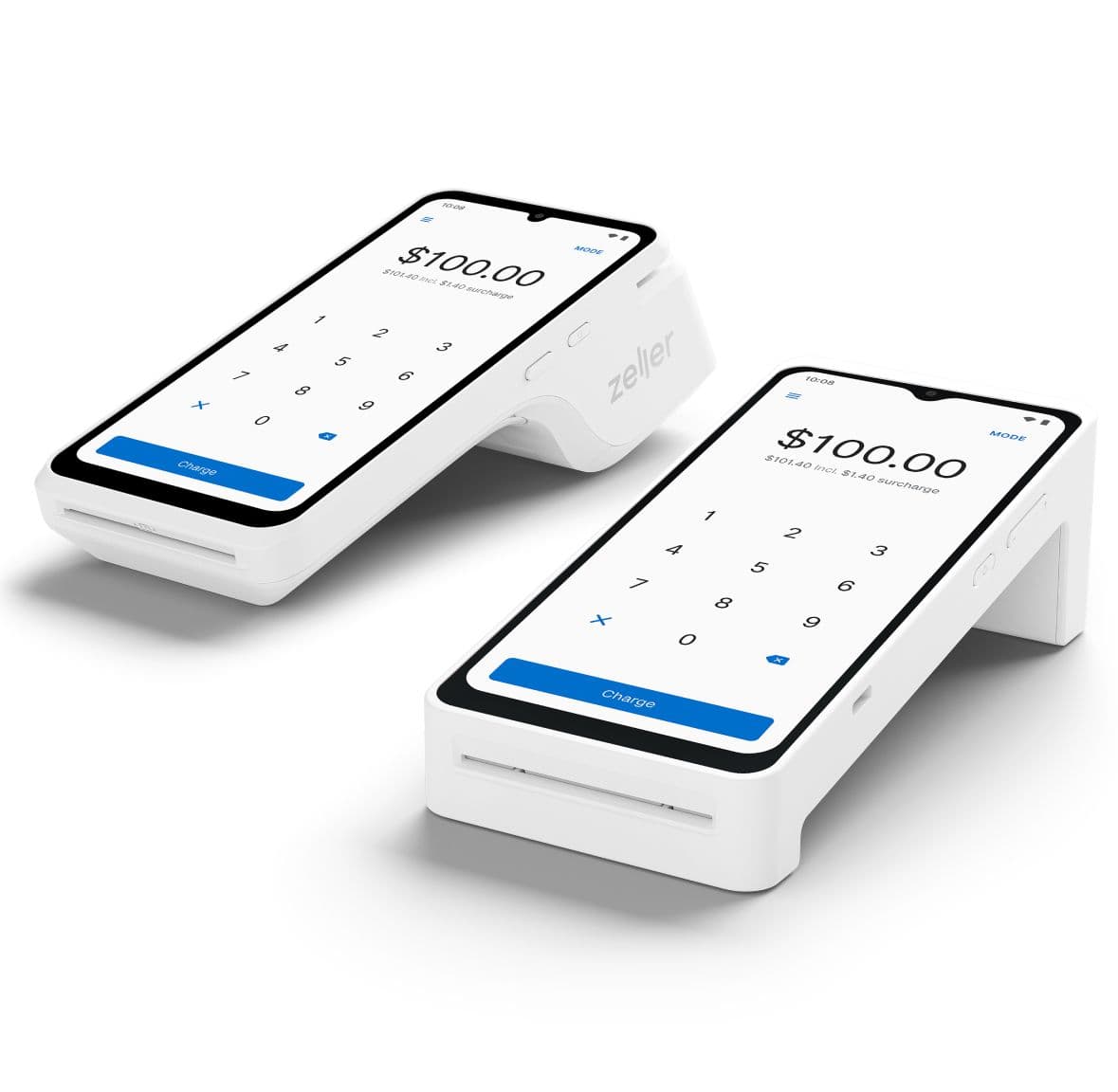
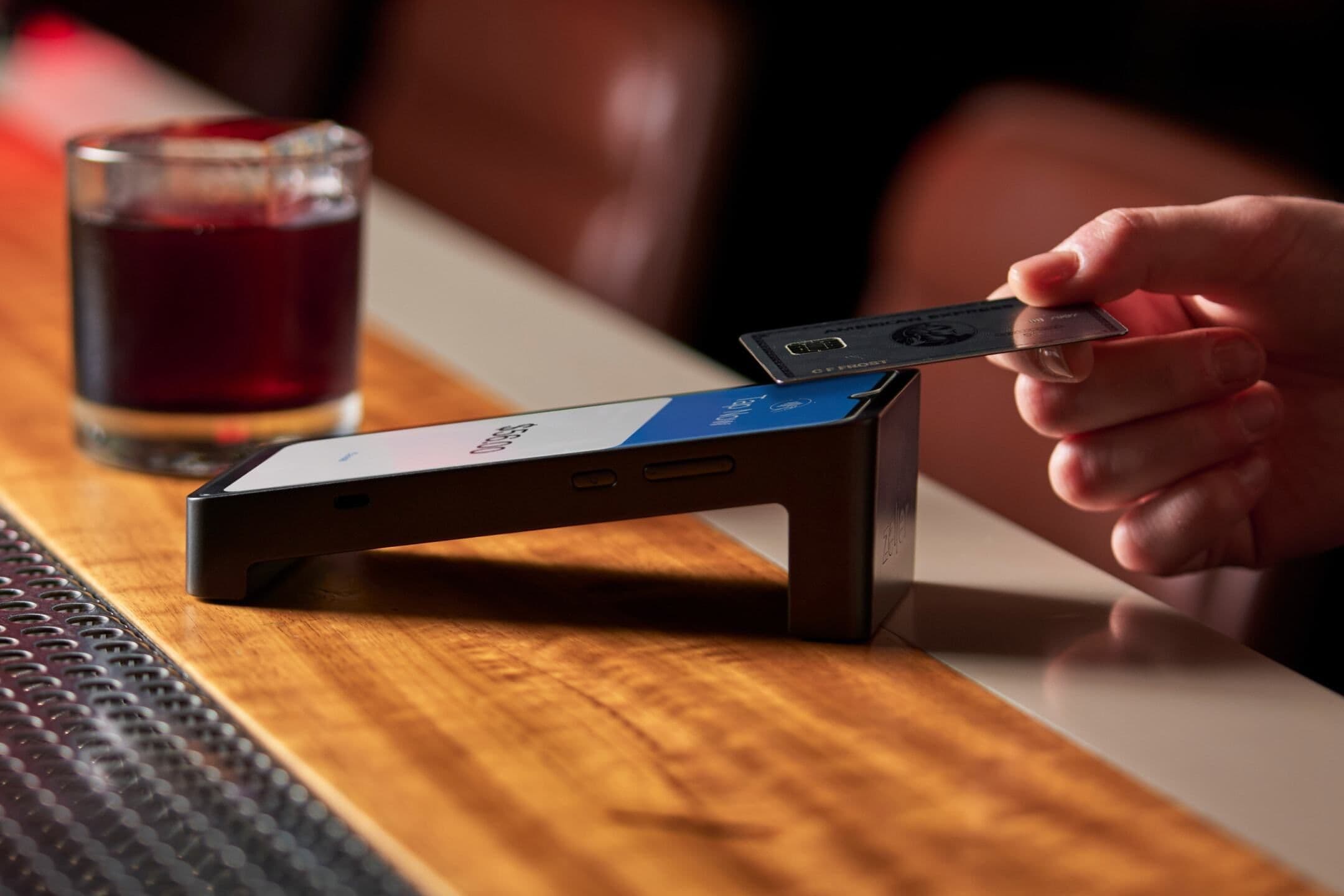
Zeller Terminal 1 just got an upgrade, and it’s faster, more durable, and packs a whole lot more under the hood. With a free POS system built in, the new Zeller Terminal 1x combines mobility, functionality, and speed for even faster checkout. Building on the reliability, ease-of-use, and affordability of Zeller Terminal 1, Zeller Terminal 1x has been purpose-built for businesses that sell in person or on the go. Featuring the largest touchscreen display of any payment terminal in the market, a built-in thermal receipt printer, and magstripe reader, its robust design travels wherever your business takes you. Available in both white and black, Zeller T1x looks as good on the counter as it does in your hand. So, what’s changed? Zeller T1x brings a number of powerful upgrades over its predecessor, starting with a larger 6.7-inch HD touchscreen — up from the 5.5-inch display on Zeller Terminal 1 — making it easier to navigate and serve customers quickly, and the largest HD terminal display available in the market. The biggest upgrade, however, is the inclusion of Zeller POS Lite, bringing a free, fully integrated point-of-sale to a device that previously handled payments alone. The hardware itself has also been reimagined, with a sturdier, more durable form factor designed to handle high-volume transactions. Zeller T1x also adds Ethernet connectivity via an adapter or dock and QR code receipts — small additions that make a real difference when it comes to flexibility and the customer experience. POS and payments — together Just like Zeller Terminal 2, Zeller T1x comes with Zeller POS Lite built in — completely free. That means you can build a product menu, create a cart, and take payment, all from the one device, with no additional software fees or third-party subscriptions required. For small and mobile businesses looking for a simple, end-to-end checkout solution, Zeller T1x delivers everything you need straight out of the box. Accept all payment types, everywhere Zeller T1x keeps you connected however you sell, supporting Wi-Fi, micro SIM ( available from the Zeller Shop here ), and Ethernet (via dock) connectivity. It accepts contactless cards, chip cards, mobile wallets, magstripe cards, and MOTO payments, and with a built-in thermal receipt printer plus digital receipt options via SMS, email, or QR code, your customers can always walk away with proof of purchase in their preferred format. Built for integrations For businesses that rely on an existing POS setup, Zeller T1x supports all integrations — either directly through the Zeller SDK or those supported by Linkly . So if you're upgrading from a previous setup, the transition is seamless. Zeller currently integrates with over 600 POS providers, all of which can be connected to Zeller T1x. To see the full list of providers Zeller integrates with, visit the partner hub here .  Accessible pricing True to Zeller's commitment to making premium payments accessible to every business, Zeller T1x retails at just $199 — making it one of the most affordable all-in-one POS and payment terminals in Australia. Who is Zeller T1x designed for? Zeller T1x is ideal for any business that wants a fast, simple, and affordable tool to take payments in store or on the go — from independent retailers and tradies to market vendors, beauty therapists, and mobile service providers. If you need a reliable terminal with a built-in printer, seamless connectivity, and an intuitive POS, Zeller T1x is built for you.

Zeller Australia

ABN 14 649 001 383

XFacebookInstagramYouTubeLinkedIn

Postal Address

PO Box 18238
Collins St East VIC
Australia 8003

Frequently Asked Questions

Zeller is an Australian financial services company that offers cutting-edge payment and financial solutions for Australian businesses. These solutions include industry-leading EFTPOS payment terminals, business transaction accounts, high-interest business savings accounts, debit cards, corporate cards, POS integrations and more. Purpose built for Australian businesses from the ground up, Zeller replaces the outdated banking products traditionally offered to Australian businesses with something much more modern, intuitive and powerful. Not only are Zeller’s products best in class, they are highly cost competitive, offering exceptional value to Australian businesses of all sizes.

Zeller is a financial solution that allows businesses to replace their traditional, outdated bank with something much more modern. Zeller offers affordable, next-generation EFTPOS Terminals for accepting payments, as well as secure business Transaction Accounts, Saving Accounts, business Debit Cards and much more.

Zeller operates in Australia, and is available to business owners who are located and operate in Australia. Zeller’s headquarters are located in Melbourne, Australia.

It’s free to sign up for a Zeller Account. From there, you’ll have access to a range of free and paid financial products. 

Zeller EFTPOS Terminals start at just $99 to purchase. In-person transactions with Zeller Terminal are charged at a low, flat rate of 1.4% per transaction (including GST) for all card types.

Zeller Transaction Account and Debit Card are free to use, with no ongoing monthly fees or charges.

You can view Zeller's pricing here.

You can contact Zeller Support on 1800 935 537, or via SMS or email. Zeller Support is available between 9AM and 1AM AET, 7 days a week. 

If you need immediate answers to your questions, you can also search the Zeller Support Centre.

Zeller is an Australian owned and operated company.

Have a question which isn’t answered here? Contact us!